
Kajian Gua Umang Tanjung Pulo dalam Konteks Folklor dan Budaya Lokal
Article Sidebar
Main Article Content
Abstract
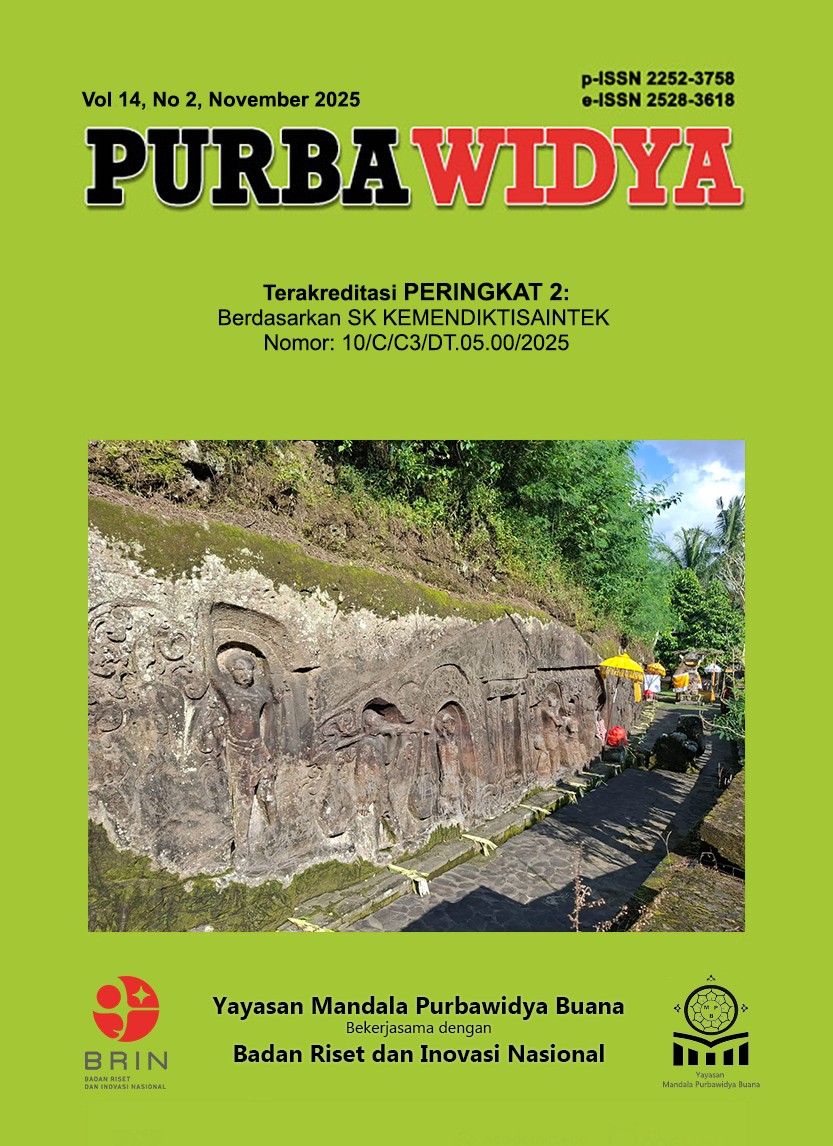
Folklore is one of the cultural products that often underlie the existence of an archaeological site, one of which is the Umang folklore that frames the archaeological site of the Umang Cave in Tanjung Pulo, Tiganderket District, Karo Regency, North Sumatra Province. This study aims to descriptively outline the archaeological aspects of Umang cave tanjung pulo, the folklore that forms the background story of the cave’s existance, as well as the relationship between the two. The methods used include observation (object description, measurement, documentation, and environmental observation); an ethnographic approach through interviews, and literature review. The result of this research are: the umang folklore that developed among the Karo people is part of the Nusantara folklore. Specifically in Sumatera, such supernatural beings are generally known as bunian. The Umang Cave in Tanjung Pulo has similarities with other Umang Caves, and the existing relief carvings provide an ilustration of its fuction. Currently, the Karo people no longer regard The Umang Cave as part of their cultural heritage, but rather view it as an object related to the supernatural being called umang.
Metrics
Article Details

This work is licensed under a Creative Commons Attribution-NonCommercial-ShareAlike 4.0 International License.
Authors who publish with this journal agree to the following terms:
- Authors retain copyright and grant the journal right of first publication with the work simultaneously licensed under Creative Commons Attribution-NonCommercial-ShareAlike 4.0 International License that allows others to share the work with an acknowledgement of the work's authorship and initial publication in this journal.
- Authors are able to enter into separate, additional contractual arrangements for the non-exclusive distribution of the journal's published version of the work (e.g., post it to an institutional repository or publish it in a book), with an acknowledgment of its initial publication in this journal.
- Authors are permitted and encouraged to post their work online (e.g., in institutional repositories or on their website) prior to and during the submission process, as it can lead to productive exchanges, as well as earlier and greater citation of published work (See The Effect of Open Access).
References
Br Halawa, S., Devitasari, L., Siahaan, L., & Daulay, I. K. (2022). Revitalisasi “Legenda Gua Umang” sebagai Naskah Drama. Bahasa Indonesia Prima, 4(1), 124–135.
Brahma, P. (1995). Karo Dari Zaman Ke Zaman. Ulih Saber.
Danandjaya, J. (2002). Folklor Indonesia: Ilmu Gosip, Dongeng dan Lain- Lain. Pustaka Utama Grafiti.
Ginting, J. R. (2010). The Myth About The Origin of The Karo House. Wacana, 12(1), 101–114.
Hidayati, D., Hidayat, H., & Khair Amal, B. (2023). Umang Folklore in Karo Society Around Umang Tanjung Pulo Cave of Karo District. Interdisciplinary Social Studies, 2(10), 2414–2426. https://doi.org/10.55324/iss.v2i10.503
Jauhari, H. (2018). Folklor Bahan Kajian Ilmu Budaya, Sastra, dan Sejarah. Penerbit Yrama Widya.
Kodiran. (2000). Perkembangan Kebudayaan dan Implikasinya Terhadap Perubahan Sosial di Indonesia. Ketahanan Nasional, V(3), 57–74.
Kusuma, T. A. B. N. S., & Damai, A. H. (2019). Perkembangan Kebudayaan Austronesia di Kawasan Asia Tenggara dan Sekitarnya. Naditira Widya, 13(2), 75–86.
Lestari, F. D., Ginting, R., & Sinulingga, J. (2021). Legenda Lau Umang Desa Dokan Kabupaten Karo. Jurnal Basataka, 4(2), 75–84.
Mardathillah, S. M., R, S., & Gani, E. (2023). Cerita Rakyat Supranatural Urang Bunian Alahan Panjang dengan Uhang Pandak Kerinci (Kajian Sastra Bandingan). Sasindo Unpam, 11(1), 1–9.
Sumiati AS. (1984). Lukisan Manusia di Pulau Lomblen, Flores Timur (Tambahan Data Hasil Seni Bercorak Prasejarah). Berkala Arkeologi, V(1), 1–8.
Wiradnyana, K. (2005). Gua Umang, Kubur Dinding Batu di Tanah Karo: Indikasi Tradisi Megalitik. Berkala Arkeologi Sangkhakala, 16, 20–30.
Yunus, H. A., Maria, S., Pelawi, K. S., & Gurning, E. T. (1995). Makna Pemakaian Rebu dalam Kehidupan Kekerabatan Orang Batak Karo (A. Ahadiat, Ed.). Departemen Pendidikan dan Kebudayaan.