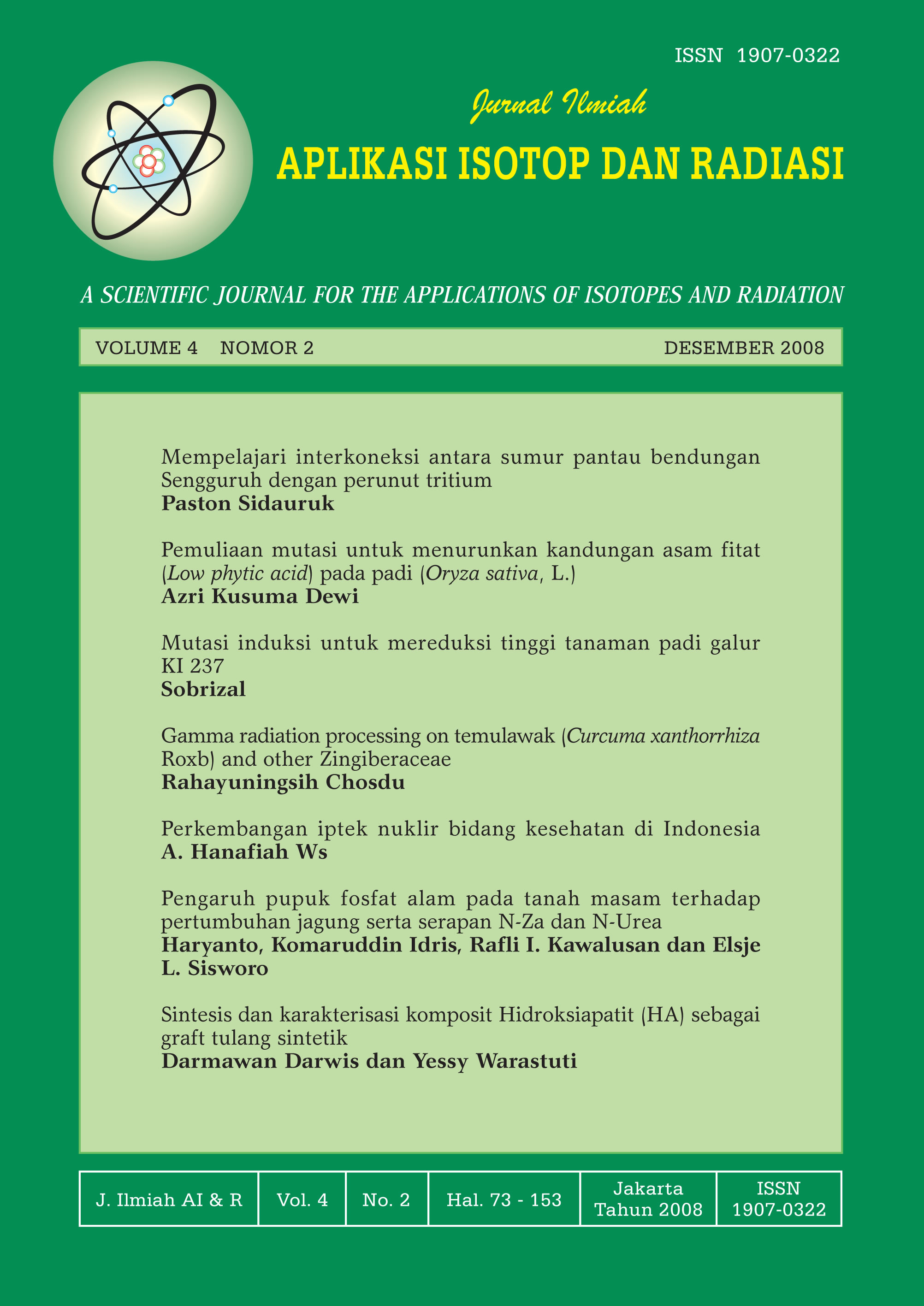
GAMMA RADIATION PROCESSING ON TEMULAWAK (Curcuma xanthorrhiza Roxb) AND OTHER ZINGIBERACEAE
DOI:
https://doi.org/10.17146/jair.2008.4.2.546Abstract
Indonesia, as tropical country has high ambient temperature and humidity which make raw materials and herbal medicines vulnerable to damage. Gamma irradiation processing offers a wide range of application to reduce post harvest losses of medicinal plants and it can also be used to improve the hygienic of raw materials as well as herbal medicine products. The research activities on radiation processing of zingiberaceae in Indonesia in 1980s were intended for: sprouting inhibition of fresh rhizome, microbiological reduction and elimination of pathogenic microbes in raw materials and herbal medicines. The samples used in this experiments were temu-lawak (Curcuma xanthorrhiza Roxb), temu-hitam (Curcuma aeruginosa), turmeric (Curcuma domestica) and galanga (Kaemferia galanga). Physico-chemicals characteristics of samples were studied to support the application of radiation processing as a preservation technique of medicinal plants as raw material or its products. The results indicated that gamma irradiation at dose of 10 kGy was sufficient to reduce microbes by 2 — 4 log cycles which contaminated the dried rhizome. Sprouting of fresh rhizome of 4 samples in the study could be retarded at dose range of 0.06-0.08 kGy. The effect of gamma irradiation at the maximum dose of 0.25 kGy (sprouting inhibition dose) and maximum dose of 10 kGy (pasteurization dose) on physicochemicalcharacteristics of four samples were studied and reported in this paper.
Downloads
Published
How to Cite
Issue
Section
License
Copyright (c) 2008 Author(s)

This work is licensed under a Creative Commons Attribution-ShareAlike 4.0 International License.

