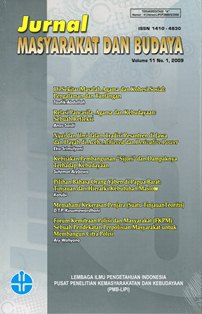
NYAI DAN UMI DALAM TRADISI PESANTREN DI JAWA DAN DAYAH DI ACEH:ACHIEVED DAN DERIVATIVE POWER
Article Sidebar
Main Article Content
Abstract
Pesantren as well as other traditional Islamic education institutions such as dayah used to be portrayed as an institution that set up particular boundaries on women’s public roles. The leadership system applied in the given institutions is also apparently patriarchal; in which man use to be prioritized in the succession of pesantren or dayah leadership. Besides, some discourses of the text books or literatures taught tend to absorb some patriarchal values. Nevertheless, beyond its patriarchal images, indeed there are still some spaces for women’s agency either in the pesantren or dayah – that would include the leadership system or even beyond. This will be feasible either through a ‘derivative power’ when the status is inherited or ‘achieved power’; when personal struggle is dominant to achieve it.
Article Details

This work is licensed under a Creative Commons Attribution-ShareAlike 4.0 International License.
References
-