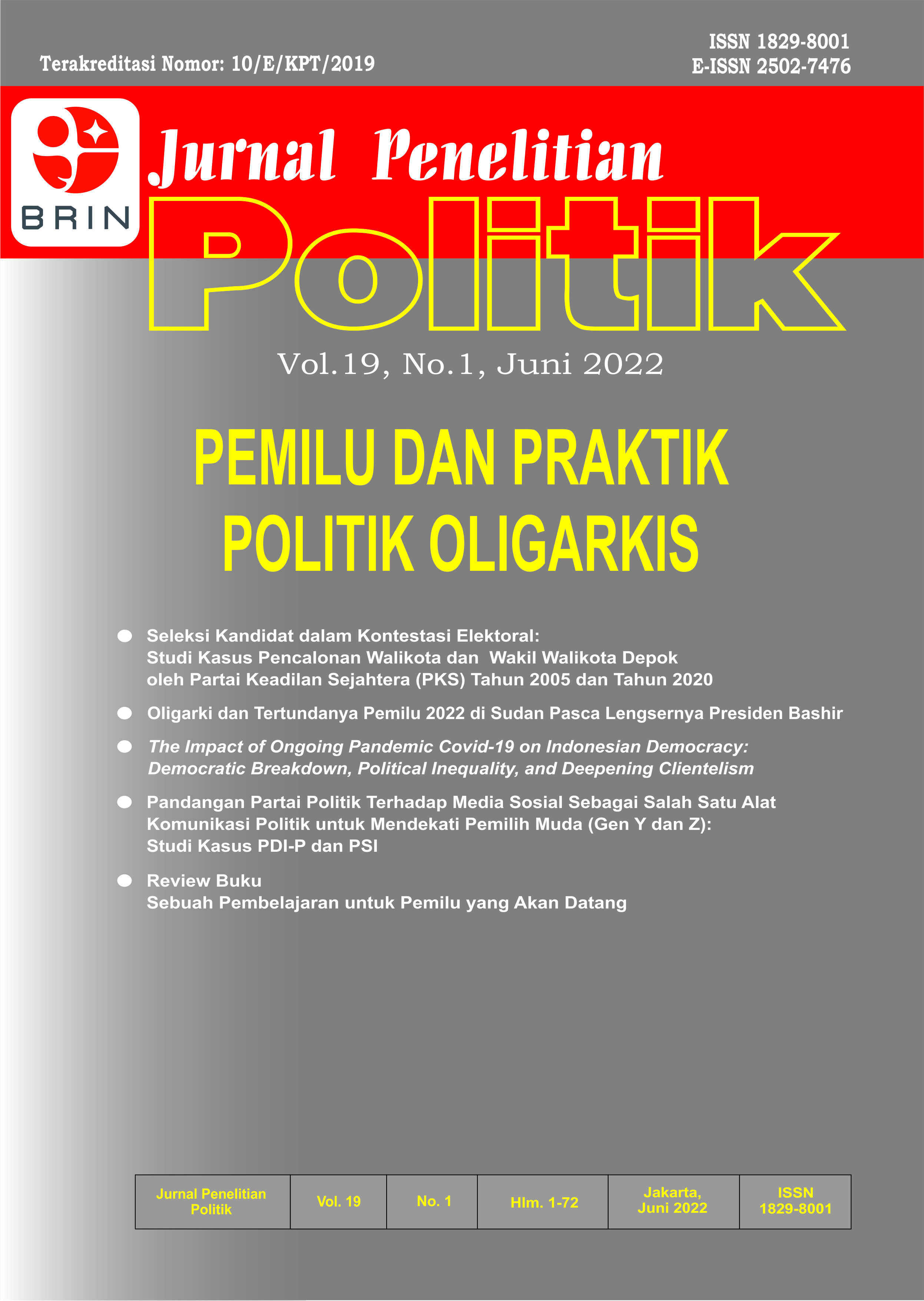
SEBUAH PEMBELAJARAN UNTUK PEMILU YANG AKAN DATANG
DOI:
https://doi.org/10.14203/jpp.v19i1.1138Keywords:
general election, proportional systems, open proportional, closed proportionalAbstract
The general election is a means for the nation and state to carry out democracy (Effendi, 2017). However,
with the condition of freedom of democracy that tends to be wildly out of control, the implementation of elections
is quite worrying. Therefore, it is necessary to monitor and evaluate the election to improve the electoral system.
Through his book, Muhammad Nizar Kherid has evaluated the electoral system in Indonesia from 1955 to 2019.
This book use the theory of legal pluralism to evaluate the electoral system in Indonesia since this theory is
considered an effective theory in evaluating the electoral system. The results of the analysis show that the most
ideal electoral system in Indonesia between 1955-2019 is the 1955 election system.
References
Adiwijaya, S. (7 Desember 2016). Jimly: Kalau Sistem Pemilu Tertutup, Parpol Harus Terbuka. Tempo. https://nasional.tempo.co/read/826172/jimly-kalau-sistem-pemilu-tertutup-parpol-harus-terbuka, diakses pada 24 Juli 2022.
Effendi, A. (2017). Studi Komparatif Pengaturan Sistem Pemilihan Umum Anggota Dewan Perwakilan Rakyat Di Indonesia. Fiat Justisia, 10(2). https://e-resources.perpusnas.go.id:2229/10.25041/fiatjustisia.v10no2.746
Kherid, M. N. (2021). Evaluasi Sistem Pemilu di Indonesia 1955-2019: Sebuah Perspektif Pluralisme Hukum. Rayyana Komunikasindo.
Puspoyo, W. (2019). Dari Soekarno Hingga Yudhoyono, Pemilu Indonesia 1955-2009. Era Adicitra Intermedia.
Riana, F, dan Syailendra P. (7 Juni 2020), Tempo, https://nasional.tempo.co/read/1350712/peneliti-lipi-sistem-pemilu-proporsional-tertutup-tidak-haram, diakses pada 24 Juli 2022.
Downloads
Published
How to Cite
Issue
Section
License
Copyright (c) 2022 Author(s)

This work is licensed under a Creative Commons Attribution-ShareAlike 4.0 International License.