Study of Lignin Addition as Coupling Agent on Paving Block Properties Made with Polypropylene
DOI:
https://doi.org/10.55981/jsmi.2026.15430Keywords:
Polypropylene, Aggregate, Lignin, Composite, Paving BlockAbstract
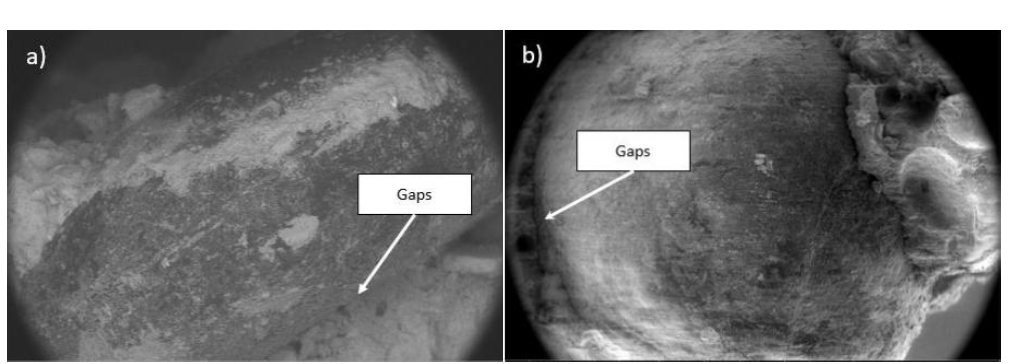
Polypropylene is well-known as a type of packaging material and thus results in abundant amount of waste. Several studies have attempted to use plastic as aggregate replacement in paving block as a waste recycling effort. On the other hand, paper industry also produces various byproducts, such as lignin. In this study, lignin was added as a coupling agent in the mixture to enhance the properties of the obtained paving block. The purpose of this study was to investigate the mixing properties of plastics, lignin, and aggregates in paving blocks. This study utilized PP and lignin, with a variation of 0; 0.1; 0.3; 0.5 wt.%. SEM was used to observe morphology, while FTIR was carried out to identify the functional groups of the mixture. Additionally, contact angle test was done to determine the surface tension of each component and showed that PP is compatible with lignin because of their similar properties in hydrophobicity.
Downloads
References
[1] A. Saputra et al., “Study of the Effect of Ultraviolet Exposure Duration on Polypropylene Properties,” Jurnal Sains Materi Indonesia, vol. 27, no. 1, pp. 11–18, Aug. 2025, doi: 10.55981/jsmi.2025.8959.
[2] S. Farishi, S. M. Mawaddah, M. Chalid, A. Zulys, and M. Ghozali, “Density and Tensile Properties Analysis of Biocomposite from Lid Film Waste and Oil Palm Empty Fruit Bunch Fiber,” Jurnal Sains Materi Indonesia, vol. 27, no. 2, pp. 128–135, Jan. 2026, doi: 10.55981/jsmi.2026.14209.
[3] W. N. Putra, R. Syahwalia, B. E. Hendrasetyawan, S. C. Giovanni, and M. Chalid, “Comparison Study of Polyethylene and Polypropylene Addition on Asphalt With Lignin as Coupling Agent,” Macromol. Symp., vol. 371, no. 1, pp. 140–143, Feb. 2017, doi: 10.1002/MASY.201600066.
[4] A. S. Andreani, H. V. R. Taopan, F. S. Banunaek, and F. Nurkhaliza, “The Impact of Waste Marble Powder as A Partial Alternative Material for Cement,” Jurnal Sains Materi Indonesia, vol. 26, no. 1, pp. 81–91, Aug. 2024, doi: 10.55981/jsmi.2024.4569.
[5] BPS-Statistics Indonesia, Environment Statistics of Indonesia 2025, vol. 44. Jakarta: BPS-Statistics Indonesia, 2025. Accessed: Dec. 16, 2025. [Online]. Available: https://www.bps.go.id/id/publication/2025/11/28/5533ef5bf73b9dd7bc5475ee/statistik-lingkungan-hidup-indonesia-2025.html
[6] A. Rochman, N. Hidayati, N. Sahid, and M. Ujianto, “Utilization of Cast Plastic Waste for Paving Block with Sand Mixture,” Civil Engineering and Architecture, vol. 11, no. 5A, pp. 2930–2935, 2023, doi: 10.13189/cea.2023.110809.
[7] S. Ahmad et al., “Effect of coconut fiber on low-density polyethylene plastic-sand paver blocks,” Ain Shams Engineering Journal, vol. 14, no. 8, p. 101982, Aug. 2023, doi: 10.1016/J.ASEJ.2022.101982.
[8] M. A. Akinpelu, S. O. Odeyemi, O. S. Olafusi, and F. Z. Muhammed, “Producing sustainable concrete with plastic waste: A review,” Environmental Challenges, vol. 9, no. 1, p. 100626, Dec. 2022, doi: 10.1016/j.jksues.2017.01.002.
[9] S. W. M. Supit and Priyono, “Utilization of recycled PET plastic waste as replacement of coarse aggregate in pervious concrete,” Mater. Today Proc., vol. 66, no. 6223, pp. 2990–2995, Jan. 2022, doi: 10.1016/j.matpr.2022.06.573.
[10] Nasruddin, Imriyanti, P. Mushar, and Muliyadi, “Influence of Partial Fine Aggregate Replacement with HDPE Plastic Waste on Concrete Compressive Strength: Melt Processing Vs. Water Quenching,” International Journal of Technology, vol. 17, no. 1, pp. 158–170, Jan. 2026, doi: 10.14716/ijtech.v17i1.8200.
[11] B. H. Miao, R. J. Headrick, Z. Li, L. Spanu, D. J. Loftus, and M. D. Lepech, “Development of Biopolymer Composites Using Lignin: A Sustainable Technology for Fostering a Green Transition in the Construction Sector,” Cleaner Materials, vol. 14, p. 100279, Dec. 2024, doi: 10.1016/J.CLEMA.2024.100279.
[12] S. Frasca et al., “Compatibility of Kraft Lignin and Phenol-Organosolv Lignin with PLA in 3D Printing and Assessment of Mechanical Recycling,” ACS Appl. Polym. Mater., vol. 6, no. 22, pp. 13574–13584, Nov. 2024, doi: 10.1021/ACSAPM.4C02208.
[13] H. Ye, T. You, H. Nawaz, and F. Xu, “A comprehensive review on polylactic acid/lignin composites — Structure, synthesis, performance, compatibilization, and applications,” Int. J. Biol. Macromol., vol. 280, p. 135886, Nov. 2024, doi: 10.1016/J.IJBIOMAC.2024.135886.
[14] Z. Terzopoulou, C. Pappa, K. Triantafyllidis, and D. N. Bikiaris, “Unravelling the impact of lignin particle size and content on enhanced value in plastic composites,” Sustainable Chemistry for the Environment, vol. 9, p. 100194, Mar. 2025, doi: 10.1016/J.SCENV.2024.100194.
[15] A. Alassod, M. Gibril, S. R. Islam, W. Huang, and G. Xu, “Polypropylene/lignin blend monoliths used as sorbent in oil spill cleanup,” Heliyon, vol. 6, no. 9, p. e04591, Sep. 2020, doi: 10.1016/j.heliyon.2020.e04591.
[16] M. P. da S. Bisneto, R. R. de Sousa Junior, G. E. S. Garcia, and D. J. dos Santos, “Enhancement of Polypropylene Adhesion through Acetylated Kraft Lignin Incorporation,” Biomass (Switzerland), vol. 4, no. 3, pp. 920–932, Sep. 2024, doi: 10.3390/biomass4030051.
[17] R. R. De Sousa et al., “Improvement of Polypropylene Adhesion by Kraft Lignin Incorporation,” Materials Research, vol. 22, no. 2, p. e20180123, 2019, doi: 10.1590/1980-5373-MR-2018-0123.
[18] K. Al-Mokhalelati, F. Karabet, A. W. Allaf, M. Naddaf, B. Assfour, and A. G. Al Lafi, “Silicone oils aided fabrication of paraffin wax coated super-hydrophobic sand: A spectroscopic study,” Heliyon, vol. 9, no. 10, Oct. 2023, doi: 10.1016/j.heliyon.2023.e20874.
[19] V. H. J. M. dos Santos et al., “Application of Fourier Transform infrared spectroscopy (FTIR) coupled with multivariate regression for calcium carbonate (CaCO3) quantification in cement,” Constr. Build. Mater., vol. 313, p. 125413, Dec. 2021, doi: 10.1016/j.conbuildmat.2021.125413.
[20] S. G. Kostryukov et al., “Determination of Lignin, Cellulose, and Hemicellulose in Plant Materials by FTIR Spectroscopy,” Journal of Analytical Chemistry 2023 78:6, vol. 78, no. 6, pp. 718–727, Jun. 2023, doi: 10.1134/S1061934823040093.
[21] B. Moreno Baqueiro Sansao, J. J. Kellar, W. M. Cross, K. Schottler, and A. Romkes, “Comparison of surface energy and adhesion energy of surface-treated particles,” Powder Technol., vol. 384, no. 8, pp. 267–275, May 2021, doi: 10.1016/j.powtec.2021.02.029.
[22] D. A. L. Leelamanie, J. Karube, and A. Yoshida, “Characterizing water repellency indices: Contact angle and water drop penetration time of hydrophobized sand,” Soil Sci. Plant Nutr., vol. 54, no. 2, pp. 179–187, Apr. 2008, doi: 10.1111/j.1747-0765.2007.00232.x.
[23] V. Carretier, M. F. Pucci, C. Lacoste, A. Regazzi, and J. M. Lopez-Cuesta, “An efficient solution to determine surface energy of powders and porous media: Application to untreated and treated lignin,” Appl. Surf. Sci., vol. 579, no. 5, p. 152159, Mar. 2022, doi: 10.1016/j.apsusc.2021.152159.
[24] M. Y. Balakshin et al., “New opportunities in the valorization of technical lignins,” ChemSusChem, vol. 14, no. 4, pp. 1016–1036, Feb. 2021, doi: 10.1002/cssc.202002553.
[25] M. Suzuki, A. Kondor, Y. Sakuraba, O. J. Rojas, and M. Ago, “Surface energy properties of lignin particles studied by inverse gas chromatography and interfacial adhesion in polyester composites with electromagnetic transparency,” Cellulose 2022 29:5, vol. 29, no. 5, pp. 2961–2973, Jan. 2022, doi: 10.1007/s10570-022-04429-5.
Downloads
Published
How to Cite
Issue
Section
License
Copyright (c) 2026 Adi Febrianto Febrianto, Hasyim Aidilichsan Muliawan, Mochamad Chalid

This work is licensed under a Creative Commons Attribution-ShareAlike 4.0 International License.