Integrating Factorial Design and Sustainable Porogen Templating for Controlled Surface Area in Hydroxyapatite
DOI:
https://doi.org/10.55981/jsmi.2026.16683Keywords:
Hydroxyapatite, Specific surface area, Precipitation method, Natural rubber latex, Factorial design, Porous biomaterialsAbstract
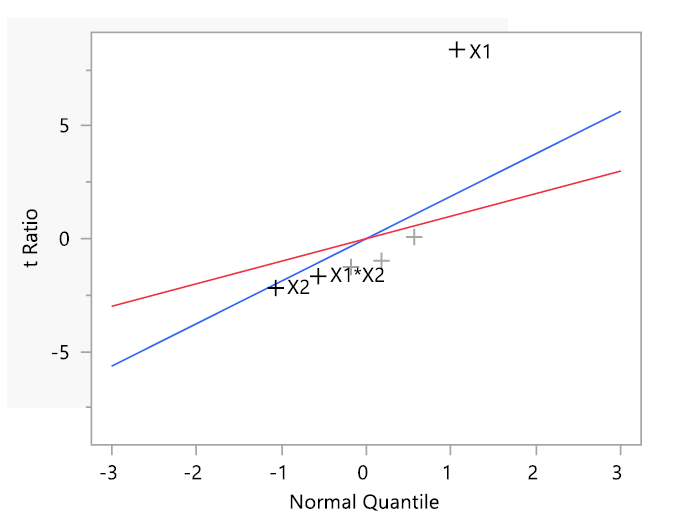
Hydroxyapatite (HA) is a widely used biomaterial due to its excellent biocompatibility, bioactivity, and osteoconductivity. Its specific surface area (SSA) is a key parameter governing protein adsorption, cell attachment, and tissue integration. In this study, porous HA was synthesized via a precipitation method using natural rubber latex as a biodegradable porogen. The effects of reaction temperature (X₁), stirring speed (X₂), and latex ratio (X₃) on SSA were systematically investigated using a 2³ full factorial design with center points. This work introduces a data-driven synthesis approach integrating statistical design with a sustainable porogen system to resolve parameter interactions beyond conventional methods. Reaction temperature was identified as the dominant factor, increasing SSA from ~23–26 m²/g to 41–60 m²/g between 70 and 90 °C. Stirring speed and latex ratio showed minor individual effects but exhibited condition-dependent interactions with temperature. The regression model demonstrated good predictive capability (R² = 0.95, RMSE = 4.21 m²/g), although a significant lack-of-fit indicated underlying nonlinear behavior. Mechanistically, higher temperature promotes nucleation-dominated growth, while excessive stirring induces agglomeration. These findings provide a robust framework for tailoring HA surface properties and advancing the design of porous biomaterials for biomedical applications.
Downloads
References
[1] G. Kaur, G. Pickrell, N. Sriranganathan, V. Kumar, and D. Homa, "Review and the state of the art: sol–gel and melt quenched bioactive glasses for tissue engineering," Journal of Biomedical Materials Research Part B: Applied Biomaterials, vol. 104, no. 6, pp. 1248-1275, 2016.
[2] I. Novella, B. Rupaedah, D. R. Eddy, Suryana, F. S. Irwansyah, and A. R. Noviyanti, "The influence of polyvinyl alcohol porogen addition on the nanostructural characteristics of hydroxyapatite," Materials, vol. 16, no. 18, p. 6313, 2023.
[3] X. Zhang et al., "Template-assisted, sol-gel fabrication of biocompatible, hierarchically porous hydroxyapatite scaffolds," Materials, vol. 12, no. 8, p. 1274, 2019.
[4] H. Gheysari, F. Mohandes, M. Mazaheri, B. Dolatyar, M. Askari, and A. Simchi, "Extraction of hydroxyapatite nanostructures from marine wastes for the fabrication of biopolymer-based porous scaffolds," Marine drugs, vol. 18, no. 1, p. 26, 2019.
[5] I. K. H. Dinatha, M. A. Jamilludin, A. I. Supii, H. Wihadmadyatami, J. Partini, and Y. Yusuf, "Characteristics of bioceramic hydroxyapatite based on sand lobster shells (Panulirus homarus) as sources of calcium with optimal calcination temperature," in Materials Science Forum, 2023, vol. 1090: Trans Tech Publ, pp. 39-44.
[6] S.-B. Lee, E.-H. Ko, J. Y. Park, and J.-M. Oh, "Mixed metal oxide by calcination of layered double hydroxide: Parameters affecting specific surface area," Nanomaterials, vol. 11, no. 5, p. 1153, 2021.
[7] F. Miculescu, A. Maidaniuc, S. I. Voicu, V. K. Thakur, G. Stan, and L. Ciocan, "Progress in hydroxyapatite–starch based sustainable biomaterials for biomedical bone substitution applications," ACS Sustainable Chemistry & Engineering, vol. 5, no. 10, pp. 8491-8512, 2017.
[8] M. Sari, P. Hening, n. Chotimah, I. D. Ana, and Y. Yusuf, "Bioceramic hydroxyapatite-based scaffold with a porous structure using honeycomb as a natural polymeric Porogen for bone tissue engineering," Biomaterials research, vol. 25, no. 1, p. 2, 2021.
[9] I. Kadek Hariscandra Dinatha, M. A. Jamilludin, A. I. Supii, H. Wihadmadyatami, J. Partini, and Y. Yusuf, "Porous scaffold hydroxyapatite from sand lobster shells (Panulirus homarus) using polyethylene oxide/chitosan as polymeric porogen for bone tissue engineering," Journal of Biomedical Materials Research Part B: Applied Biomaterials, vol. 112, no. 1, p. e35341, 2024.
[10] R. Indira, V. Jaisankar, and S. Durai, "A STUDY ON THE DEVELOPMENT OF SCAFFOLD FABRICATION USING CITRIC ACID POLYESTER-NANOHYDROXYAPATITE COMPOSITE," Bulletin of the Chemical Society of Ethiopia, vol. 36, no. 4, 2022.
[11] B. He, C. Wang, X. Xiong, J. Li, Z. Jin, and S. Qu, "Bio‐inspired low wear and durable lubrication interfacial system based on thixotropic hydrogel for artificial joints," Biosurface and Biotribology, vol. 9, no. 3, pp. 59-70, 2023.
[12] A. I. Nicoara, A. E. Alecu, G.-C. Balaceanu, E. M. Puscasu, B. S. Vasile, and R. Trusca, "Fabrication and characterization of porous diopside/akermanite ceramics with prospective tissue engineering applications," Materials, vol. 16, no. 16, p. 5548, 2023.
[13] W. Volksen, R. D. Miller, and G. Dubois, "Low dielectric constant materials," Chemical reviews, vol. 110, no. 1, pp. 56-110, 2010.
[14] I. Cacciotti, "Multisubstituted hydroxyapatite powders and coatings: The influence of the codoping on the hydroxyapatite performances," International Journal of Applied Ceramic Technology, vol. 16, no. 5, pp. 1864-1884, 2019.
[15] M. Uota, H. Arakawa, N. Kitamura, T. Yoshimura, J. Tanaka, and T. Kijima, "Synthesis of high surface area hydroxyapatite nanoparticles by mixed surfactant-mediated approach," Langmuir, vol. 21, no. 10, pp. 4724-4728, 2005.
[16] C. Xu, R. Liu, L. Chen, and Q. Wang, "Efficient adsorption removal of phosphate from rural domestic sewage by waste eggshell-modified peanut shell biochar adsorbent materials," Materials, vol. 16, no. 17, p. 5873, 2023.
[17] A. Miño et al., "Strategy to produce highly loaded alumina supported CoMo-S catalyst for straight run gas oil hydrodesulfurization," Applied Catalysis A: General, vol. 530, pp. 145-153, 2017.
[18] X.-Y. Yang, L.-H. Chen, Y. Li, J. C. Rooke, C. Sanchez, and B.-L. Su, "Hierarchically porous materials: synthesis strategies and structure design," Chemical Society Reviews, vol. 46, no. 2, pp. 481-558, 2017.
[19] W. Cao, J. Kang, G. Fan, L. Yang, and F. Li, "Fabrication of porous ZrO2 nanostructures with controlled crystalline phases and structures via a facile and cost-effective hydrothermal approach," Industrial & Engineering Chemistry Research, vol. 54, no. 51, pp. 12795-12804, 2015.
[20] N. A. Mokri, O. P. Ching, H. Mukhtar, and C. T. Leng, "Tailoring particle size and agglomeration state of mesoporous MCM-48 via optimisation of sol-gel silica process," Journal of Physical Science, vol. 30, no. 1, pp. 145-168, 2019.
[21] B. Brand, M. Morbidelli, and M. Soos, "Shear-induced reactive gelation," Langmuir, vol. 31, no. 46, pp. 12727-12735, 2015.
[22] C. A. Garcia-Gonzalez, A. Concheiro, and C. Alvarez-Lorenzo, "Processing of materials for regenerative medicine using supercritical fluid technology," Bioconjugate chemistry, vol. 26, no. 7, pp. 1159-1171, 2015.
[23] K. Moukahhal et al., "Guided crystallization of zeolite beads composed of ZSM-12 nanosponges," Crystals, vol. 10, no. 9, p. 828, 2020.
[24] N. Pramanik and T. Imae, "Fabrication and characterization of dendrimer-functionalized mesoporous hydroxyapatite," Langmuir, vol. 28, no. 39, pp. 14018-14027, 2012.
[25] S. A. Nosrati, M. Salahinejad, M. Aboudzadeh, M. Amiri, and A. Roozbahani, "The Central Composite Design and Artificial Neural Network in Optimization and Modeling of Radiolabeling Process of 177Lu-hydroxyapatite as a Potential Radiosynovectomy Agent," 2024.
[26] N. P. Varma, A. Sinha, S. K. Gupta, J. K. Mahato, and P. Chand, "Enhanced defluoridation by nano-crystalline alum-doped hydroxyapatite and artificial intelligence (AI) modeling approach," Frontiers in Environmental Science, vol. 12, p. 1363724, 2024.
[27] M. Hermassi, S. Krim, Y. Kraiem, M. A. Hajjaji, M. F. Mimouni, and A. Mtibaa, "Wind speed estimation and maximum power point tracking using neuro-fuzzy systems for variable-speed wind generator," Wind Engineering, vol. 48, no. 6, pp. 1088-1104, 2024.
[28] G. O. Ogbeh, A. O. Ogunlela, and N. O. Emaikwu, "Statistical optimization of iodine adsorption for Pentaclethra macrophylla pods activated carbon production," Science World Journal, vol. 18, no. 4, pp. 678-693, 2023.
[29] M. Hermassi, C. Valderrama, J. Dosta, J. Cortina, and N. H. Batis, "Evaluation of hydroxyapatite crystallization in a batch reactor for the valorization of alkaline phosphate concentrates from wastewater treatment plants using calcium chloride," Chemical engineering journal, vol. 267, pp. 142-152, 2015.
[30] N. E. A. A. Rahim, N. I. W. Azelee, M. N. F. M. Ghazali, N. M. S. Ismail, and N. H. Abdul Manas, "Process parameter study and kinetic of remazol dye adsorption onto local rice husk‐based organic porous materials," Environmental Quality Management, vol. 33, no. 2, pp. 343-353, 2023.
[31] S. D. Rocha, L. Katsarou, and G. P. Demopoulos, "Enhanced stability of scorodite in oxic and anoxic systems via surface coating with hydroxyapatite and fluorapatite," Minerals, vol. 12, no. 8, p. 1014, 2022.
[32] J. Lasprilla-Botero, M. Álvarez-Láinez, D. A. Acosta, and J. M. Martı́n-Martı́nez, "Water-based adhesive formulations for rubber to metal bonding developed by statistical design of experiments," International Journal of Adhesion and Adhesives, vol. 73, pp. 58-65, 2017.
[33] M. Reindl, V. Zach, G. Cvirn, and S. P. Schwaminger, "Influence of coprecipitation synthesis parameters on the physicochemical properties and biological effects of iron oxide nanoparticles," Nanoscale Advances, vol. 7, no. 22, pp. 7395-7407, 2025.
Downloads
Published
How to Cite
Issue
Section
License
Copyright (c) 2026 Agung Prabowo, Ahmad Fadli, Heni Sugesti, Reno Susanto, Muh. Irwan, Ramli Thahir, Mustafa

This work is licensed under a Creative Commons Attribution-ShareAlike 4.0 International License.