Electronic Structure of Various Shapes of Graphene Quantum Dot
DOI:
https://doi.org/10.55981/jsmi.2025.8998Keywords:
Graphene, Electronics structure, Quantum dotsAbstract
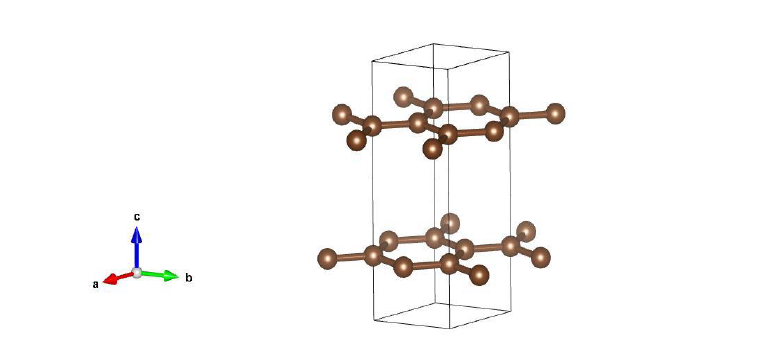
– We reported our study the electronic structure of graphene in bulk structure and graphene quantum dot (GQD) by density functional theory (DFT) by using in quantum espresso (QE) package. In order simulate the realistic shape of GQD, we set vacuum layer to avoid interaction between quantum dot in the periodic structure in crystal. We examined various shape of quantum dot namely triangular, Hexagon, parallelogram. The band gap is tunable by its shape which open wide application of GQD. We showed that we can tuning the electronic structure of graphene by tuning its structure. In bulk structure, graphene is zero-gap semiconductor. On the other hand, the results on GQD showed the discrete energy level and different shapes of GQD have different energy level and band gap.
Downloads
References
[1] M. M. Anas, A. P. Othman, and G. Gopir, “First-principle study of quantum confinement effect on small sized silicon quantum dots using density-functional theory,” AIP Conference Proceedings, vol. 1614, no. 1, pp. 104–109, Sep. 2014, doi: 10.1063/1.4895180.
[2] B.-R. Wu, “A DFT study for silicene quantum dots embedded in silicane: controllable magnetism and tuneable band gap by hydrogen,” RSC Adv., vol. 9, no. 56, pp. 32782–32790, Oct. 2019, doi: 10.1039/C9RA04705K.
[3] B. Alén, J. Martínez-Pastor, D. Granados, and J. M. García, “Continuum and discrete excitation spectrum of single quantum rings,” Phys. Rev. B, vol. 72, no. 15, p. 155331, Oct. 2005, doi: 10.1103/PhysRevB.72.155331.
[4] S. Aftab, A. Shah, C. Erkmen, S. Kurbanoglu, and B. Uslu, “Chapter 1 - Quantum dots: Synthesis and characterizations,” in Electroanalytical Applications of Quantum Dot-Based Biosensors, B. Uslu, Ed., in Micro and Nano Technologies. , Elsevier, 2021, pp. 1–35. doi: 10.1016/B978-0-12-821670-5.00005-1.
[5] K. Agarwal, H. Rai, and S. Mondal, “Quantum dots: an overview of synthesis, properties, and applications,” Mater. Res. Express, vol. 10, no. 6, p. 062001, Jun. 2023, doi: 10.1088/2053-1591/acda17.
[6] R. Nagpal and M. Gusain, “Chapter 25 - Synthesis methods of quantum dots,” in Graphene, Nanotubes and Quantum Dots-Based Nanotechnology, Y. Al-Douri, Ed., in Woodhead Publishing Series in Electronic and Optical Materials. , Woodhead Publishing, 2022, pp. 599–630. doi: 10.1016/B978-0-323-85457-3.00006-2.
[7] S. A. Tolba, K. M. Gameel, B. A. Ali, H. A. Almossalami, and N. K. Allam, “The DFT+U: Approaches, Accuracy, and Applications,” Density Functional Calculations - Recent Progresses of Theory and Application, May 2018, doi: 10.5772/intechopen.72020.
[8] B. Jiang et al., “Edge stimulated hydrogen evolution reaction on monodispersed MXene quantum dots,” Chemical Engineering Journal, vol. 442, p. 136119, Aug. 2022, doi: 10.1016/j.cej.2022.136119.
[9] M. T. Dang, P. T. Bich Thao, T. T. Ngoc Thao, and N. T. Tien, “First-principles study of electronic and optical properties of small edge-functionalized penta-graphene quantum dots,” AIP Advances, vol. 12, no. 6, p. 065008, Jun. 2022, doi: 10.1063/5.0091475.
[10] P. Giannozzi et al., “QUANTUM ESPRESSO: a modular and open-source software project for quantum simulations of materials,” J. Phys.: Condens. Matter, vol. 21, no. 39, p. 395502, Sep. 2009, doi: 10.1088/0953-8984/21/39/395502.
[11] “Advanced capabilities for materials modelling with Quantum ESPRESSO - IOPscience.” Accessed: Aug. 31, 2023. [Online]. Available: https://iopscience.iop.org/article/10.1088/1361-648X/aa8f79/meta
[12] H. G. AL-Toki, R. Maalej, and B. G. Shohany, “Effect of Cu-doping on the optical properties of quantum dot materials in group II-VI using density functional theory approach,” Opt Quant Electron, vol. 55, no. 14, p. 1249, Nov. 2023, doi: 10.1007/s11082-023-05292-9.
[13] Y. Cui et al., “Graphene quantum dots/carbon nitride heterojunction with enhanced visible-light driven photocatalysis of nitric oxide: An experimental and DFT study,” Carbon, vol. 191, pp. 502–514, May 2022, doi: 10.1016/j.carbon.2022.02.004.
[14] D. T. Castañeda Ortiz et al., “Exploring the photovoltaic performance of boron carbide quantum dots doped with heteroatoms: A DFT analysis,” Diamond and Related Materials, vol. 143, p. 110933, Mar. 2024, doi: 10.1016/j.diamond.2024.110933.
[15] H. Rojas-Chávez, A. Miralrio, H. Cruz-Martínez, G. Carbajal-Franco, and M. A. Valdés-Madrigal, “Oriented-Attachment- and Defect-Dependent PbTe Quantum Dots Growth: Shape Transformations Supported by Experimental Insights and DFT Calculations,” Inorg. Chem., vol. 60, no. 10, pp. 7196–7206, May 2021, doi: 10.1021/acs.inorgchem.1c00259.
[16] K. Momma and F. Izumi, “VESTA 3 for three-dimensional visualization of crystal, volumetric and morphology data,” Journal of Applied Crystallography, vol. 44, no. 6, pp. 1272–1276, Dec. 2011, doi: 10.1107/S0021889811038970.
[17] R. Bertel, M. E. Mora-Ramos, and J. D. Correa, “Electronic properties and optical response of triangular and hexagonal MoS2 quantum dots. A DFT approach,” Physica E: Low-dimensional Systems and Nanostructures, vol. 109, pp. 201–208, May 2019, doi: 10.1016/j.physe.2019.01.021.
[18] I. Ramli and Sukarti, “Theoretical study of electronic properties of graphene via density functional theory,” AIP Conference Proceedings, vol. 2799, no. 1, p. 020138, Apr. 2024, doi: 10.1063/5.0181932.
[19] A. H. Castro Neto, F. Guinea, N. M. R. Peres, K. S. Novoselov, and A. K. Geim, “The electronic properties of graphene,” Rev. Mod. Phys., vol. 81, no. 1, pp. 109–162, Jan. 2009, doi: 10.1103/RevModPhys.81.109.
[20] T. Ando, “The electronic properties of graphene and carbon nanotubes,” NPG Asia Mater, vol. 1, no. 1, Art. no. 1, Oct. 2009, doi: 10.1038/asiamat.2009.1.
[21] Y. Sun et al., “Magnetism of graphene quantum dots,” npj Quant Mater, vol. 2, no. 1, Art. no. 1, Jan. 2017, doi: 10.1038/s41535-017-0010-2.
[22] “Heterostructural CsPbX3-PbS (X = Cl, Br, I) Quantum Dots with Tunable Vis–NIR Dual Emission | Journal of the American Chemical Society.” Accessed: Jul. 18, 2024. [Online]. Available: https://pubs.acs.org/doi/abs/10.1021/jacs.9b13681
[23] L. Ai et al., “Solid-state Fluorescence from Carbon Dots Widely Tunable from Blue to Deep Red through Surface Ligand Modulation,” Angewandte Chemie International Edition, vol. 62, no. 12, p. e202217822, 2023, doi: 10.1002/anie.202217822.
[24] “Tunable light emission from carbon dots by controlling surface defects - ScienceDirect.” Accessed: Jul. 18, 2024. [Online]. Available: https://www.sciencedirect.com/science/article/abs/pii/S1001841721001819
[25] “Ligand & band gap engineering: tailoring the protocol synthesis for achieving high-quality CsPbI3 quantum dots - Nanoscale (RSC Publishing).” Accessed: Jul. 18, 2024. [Online]. Available: https://pubs.rsc.org/en/content/articlelanding/2020/nr/d0nr03180a/unauth
[26] “Preparation of carbon quantum dots with tunable photoluminescence by rapid laser passivation in ordinary organic solvents - Chemical Communications (RSC Publishing).” Accessed: Jul. 18, 2024. [Online]. Available: https://pubs.rsc.org/en/content/articlelanding/2011/cc/c0cc03552a
[27] “A green synthetic route for the surface-passivation of carbon dots as an effective multifunctional fluorescent sensor for the recognition and detection of toxic metal ions from aqueous solution - Analytical Methods (RSC Publishing).” Accessed: Jul. 18, 2024. [Online]. Available: https://pubs.rsc.org/en/content/articlelanding/2019/ay/c8ay02451k
[28] S. Paul et al., “Manganese-Doping-Induced Quantum Confinement within Host Perovskite Nanocrystals through Ruddlesden–Popper Defects,” Angewandte Chemie International Edition, vol. 59, no. 17, pp. 6794–6799, 2020, doi: 10.1002/anie.201914473.
[29] “Intense Dark Exciton Emission from Strongly Quantum-Confined CsPbBr3 Nanocrystals | Nano Letters.” Accessed: Jul. 18, 2024. [Online]. Available: https://pubs.acs.org/doi/abs/10.1021/acs.nanolett.0c02714
[30] C. Otero-Martínez, D. García-Lojo, I. Pastoriza-Santos, J. Pérez-Juste, and L. Polavarapu, “Dimensionality Control of Inorganic and Hybrid Perovskite Nanocrystals by Reaction Temperature: From No-Confinement to 3D and 1D Quantum Confinement,” Angewandte Chemie, vol. 133, no. 51, pp. 26881–26888, 2021, doi: 10.1002/ange.202109308.
Downloads
Published
How to Cite
Issue
Section
License
Copyright (c) 2025 Irwan Ramli

This work is licensed under a Creative Commons Attribution-ShareAlike 4.0 International License.