
Reassessment of Triticeae Starch Grain from Dental Calculus of Human Remain from Plawangan Site, Rembang Tinjauan Kembali Temuan Butir Pati Triticeae pada Kalkulus Gigi Rangka Manusia Situs Plawangan, Rembang
Article Sidebar
Main Article Content
Abstract
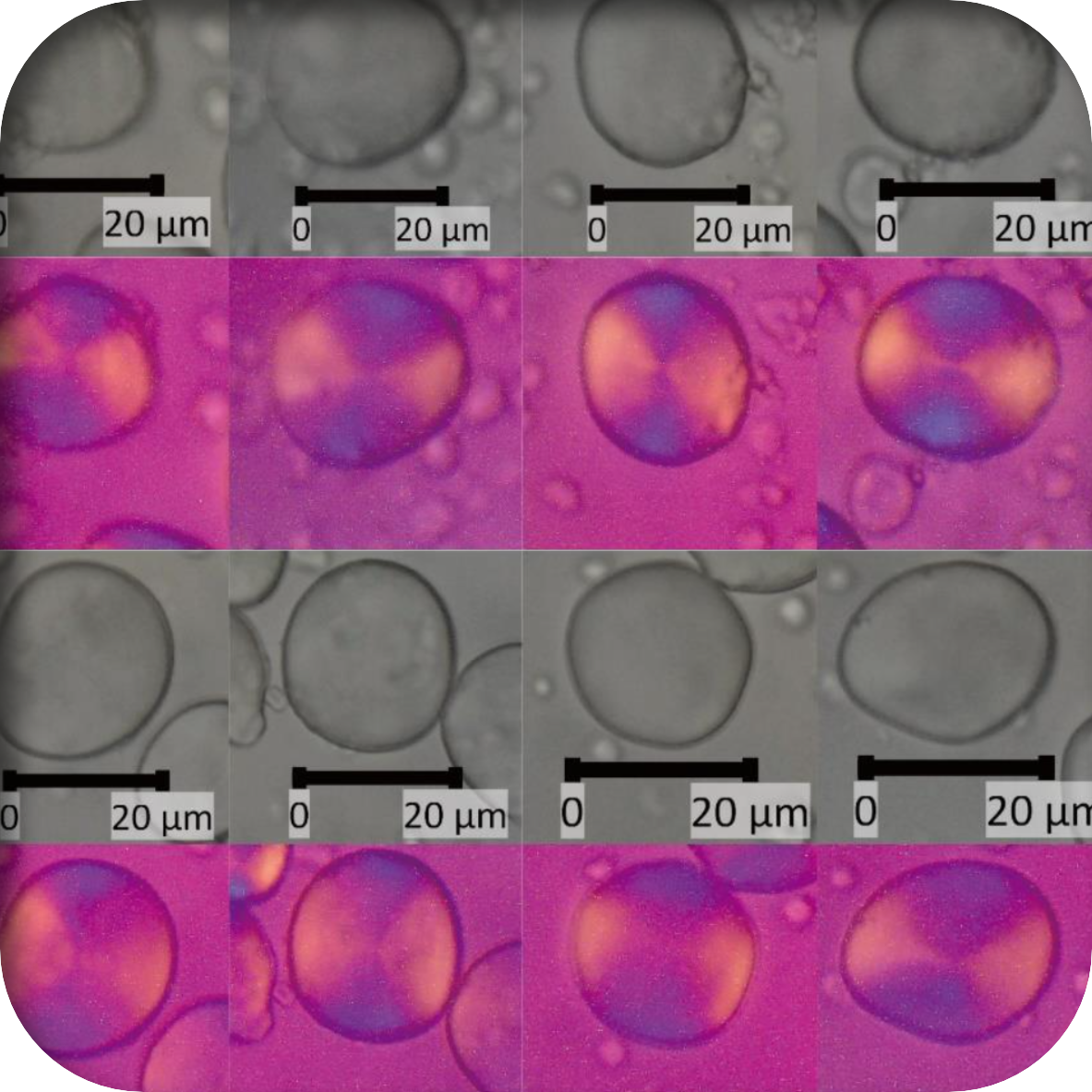
The extraction of plant micro remains from the dental calculus of human remains at the Plawangan site yielded a starch grain. Preliminary analysis with a limited reference sample suggested that the starch indicated the consumption of cereal from the Triticeae plants, specifically wheat or barley, in the early AD. This article aims to reassess the starch previously identified as belonging to the Triticeae. The starch was re-examined using descriptive-qualitative and multivariate comparative analyses, including LDA and cluster analysis. The data used were wheat and barley starch reference samples extracted from fresh plants. The result demonstrated that the starch from the dental calculus was not origin from Triticeae, particularly wheat and barley. This was due to the primer difference in surface area. The result also invalidated the initial interpretation suggesting the consumption of wheat or barley at the Plawangan site in the early AD.
Article Details

This work is licensed under a Creative Commons Attribution-NonCommercial-ShareAlike 4.0 International License.
References
An, X., & Xie, B. (2022). Phytoliths from Woody Plants: A Review. Diversity 2022, Vol. 14, Page 339, 14(5), 339. https://doi.org/10.3390/D14050339
Arranz-Otaegui, A., Cubas, M., Ibañez, J. J., & Rosenberg, D. (2024). Plants meet artefacts: Developing interdisciplinary approaches to identify plant processing, consumption and use in archaeology. Journal of Archaeological Science: Reports, 104617. https://doi.org/10.1016/J.JASREP.2024.104617
Arrozain, M. D. F. (2024). Ragam Tumbuhan dan Pemanfaatannya pada Masa Logam Awal di Situs Palemba, Kalumpang, Sulawesi Barat [Master thesis]. Universitas Gadjah Mada.
Barber, I. G., & Benham, R. W. (2024). American sweet potato and Asia-Pacific crop experimentation during early colonisation of temperate-climate Aotearoa/New Zealand. Antiquity, 98(401), 1376–1394. https://doi.org/10.15184/aqy.2024.143
Berenguer, P., Clavero, C., Saldarriaga-Córdoba, M., Rivera-Hutinel, A., Seelenfreund, D., Martinsson-Wallin, H., Castañeda, P., & Seelenfreund, A. (2024). Identification of breadfruit (Artocarpus altilis) and South American crops introduced during early settlement of Rapa Nui (Easter Island), as revealed through starch analysis. PLOS ONE, 19(3), e0298896. https://doi.org/10.1371/journal.pone.0298896
Collura, L. V., & Neumann, K. (2017). Wood and bark phytoliths of West African woody plants. Quaternary International, 434, 142–159. https://doi.org/10.1016/j.quaint.2015.12.070
Damai, A. H. (2023). Deskripsi Paleopatologi Gigi Manusia Purba Berdasarkan Aktivitas di Situs Plawangan [Skripsi Sarjana]. Universitas Udayana.
Drennan, R. D. (2009). Statistics for Archaeologists, 2nd Edition (2nd ed.). Springer US. https://doi.org/10.1007/978-1-4419-0413-3
Felizardo, M. P., & Freire, J. T. (2018). Characterization of barley grains in different levels of pearling process. Journal of Food Engineering, 232, 29–35. https://doi.org/10.1016/j.jfoodeng.2018.03.017
Field, J. H. (2006). Reference Collection. In R. Torrence & H. Barton (Eds.), Ancient Starch Research (pp. 95–114). Left Coast Press Inc.
Field, J. H., Coster, A. C., Shaw, B., Hayes, E., Fullagar, R., Lovave, M., Haro, J., & Summerhayes, G. R. (2024). Ancient starch and usewear analyses of an excavated pestle fragment from the Upper Kaironk Valley, Madang Province, Papua New Guinea. In A. Ford, B. Shaw, & D. Gaffney (Eds.), Forty Years in the South Seas: Archaeological Perspectives on the Human History of Papua New Guinea and the Western Pacific Region (pp. 391–416). ANU Press.
Findley, D. M., & Roberts, P. (2024). Cultivating Wheat in the Philippines, ca. 1600–1800 CE: Why a Grain Was Not Adopted by Local Populations. International Journal of Historical Archaeology. https://doi.org/10.1007/s10761-024-00753-7
Fuller, D. Q. (2007). Contrasting Patterns in Crop Domestication and Domestication Rates: Recent Archaeobotanical Insights from the Old World. Annals of Botany, 100(5), 903–924. https://doi.org/10.1093/aob/mcm048
Grubben, G. J. H., & Partohardjono, S. (Eds.). (1996). Plant Resources of South-East Asia No 10: Cereals. Prosea Foundation.
Henry, A. G. (2014). Formation and Taphonomic Processes Affecting Starch Granules. In J. M. Marston, J. D. Guedes, & C. Warinner (Eds.), Method and Theory in Paleoethnobotany (pp. 35–50). University Press of Colorado.
Henry, A. G. (2020). Starch Granules as Markers of Diet and Behavior. In A. G. Henry (Ed.), Handbook for the Analysis of Micro-Particles in Archaeological Samples (pp. 97–116). Springer. https://doi.org/10.1007/978-3-030-42622-4_5
Henry, A. G., & Piperno, D. R. (2008). Using plant microfossils from dental calculus to recover human diet: a case study from Tell al-Raqā’i, Syria. Journal of Archaeological Science, 35(7), 1943–1950. https://doi.org/10.1016/J.JAS.2007.12.005
ICSN. (2011). The International Code for Starch Nomenclature. http://fossilfarm.org/ICSN/Code.html
International Committee for Phytolith Taxonomy (ICPT). (2019). International Code for Phytolith Nomenclature (ICPN) 2.0. Suplementary Information: Morphotype Descriptions. Annals of Botany, 124, 189–199.
Kilian, B., Martin, W., & Salamini, F. (2010). Genetic Diversity, Evolution and Domestication of Wheat and Barley in the Fertile Crescent. In M. Glaubrecht (Ed.), Evolution in Action (pp. 137–166). Springer Berlin Heidelberg. https://doi.org/10.1007/978-3-642-12425-9_8
Lancelotti, C., & Madella, M. (2023). Archaeobotany. In A. M. Pollard, R. A. Armitage, & C. A. Makarewicz (Eds.), Handbook of Archaeological Sciences (2nd ed., Vol. 2, pp. 701–714). John Wiley & Sons Ltd. https://doi.org/https://doi.org/10.1002/9781119592112.ch35
Lentfer, C. (2009). Building a comparative starch reference collection for Indonesia and its application to palaeoenvironmental and archaeological research. In M. Haslam, G. Robertson, A. Crowther, S. Nugent, & L. Kirkwood (Eds.), Terra Australis 30: Archaeological Science Under a Microscope: Studies in Residue and Ancient DNA Analysis in Honour of Thomas H. Loy (pp. 80–101). ANU Press. https://doi.org/10.22459/ta30.07.2009.07
Louderback, L. A., Wilks, S., Herzog, N. M., Brown, G. H., Joyce, K., & Pavlik, B. M. (2022). Morphometric Identification of Starch Granules From Archaeological Contexts: Diagnostic Characteristics of Seven Major North American Plant Families. Frontiers in Earth Science, 10, 1224. https://doi.org/10.3389/FEART.2022.897183/BIBTEX
New Zealand Flour Millers Association Inc. (2025, April 23). Structure of a wheat grain. New Zealand Flour Millers Association Inc. https://flourinfo.co.nz/learn/structure-wheat-grain
Núñez-Cortés, Y., Barba-Pingarrón, L., Cruz-Palma, J. E., Ortiz-Butrón, A., & Rodríguez, M. (2024). Domestic Activities and Culinary Practices at Lomas Entierros, Costa Rica: A Perspective from Chemical Residues, Starch Grain Analyses, and Micro-archaeology. Latin American Antiquity, 35(3), 712–730. https://doi.org/10.1017/laq.2023.65
Preiss, J. (2018). Plant Starch Synthesis. In M. Sjöö & L. Nilsson (Eds.), Starch in Food: Structure, Function and Applications (2nd ed., pp. 3–95). Woodhead Publishing. https://doi.org/10.1016/B978-0-08-100868-3.00001-9
Puspitasari, I. (2023). Variasi Bahan Makanan Dua Individu Pendukung Situs Plawangan Berdasarkan Analisis Starch dan Fitolit pada Kalkulus Gigi [Skripsi]. Gadjah Mada University.
Radini, A., Tromp, M., Beach, A., Tong, E., Speller, C., McCormick, M., Dudgeon, J. V., Collins, M. J., Rühli, F., Kröger, R., & Warinner, C. (2019). Medieval women’s early involvement in manuscript production suggested by lapis lazuli identification in dental calculus. Science Advances, 5(1). https://doi.org/10.1126/sciadv.aau7126
Shennan, S. (2004). Quantifying Archaeology. Edinburgh University Press.
Smith, A. (2014). The Use of Multivariate Statistics within Archaeobotany. In J. M. Marston, J. D. Guedes, & C. Warinner (Eds.), Method and Theory in Paleoethnobotany (pp. 181–204). University Press of Colorado. https://doi.org/10.5876/9781607323167.c010
Torrence, R., & Barton, H. (Eds.). (2006). Ancient Starch Research. Routledge.
Torrence, R., Wright, R., & Conway, R. (2004). Identification of starch granules using image analysis and multivariate techniques. Journal of Archaeological Science, 31(5), 519–532. https://doi.org/10.1016/J.JAS.2003.09.014
Yang, X., & Perry, L. (2013). Identification of ancient starch grains from the tribe Triticeae in the North China Plain. Journal of Archaeological Science, 40(8), 3170–3177. https://doi.org/10.1016/j.jas.2013.04.004
