
Reading the Gedung Singa Façade Through Symbolic Archaeology: Colonial Power and Visual Identity in Early 20th Century Architecture Membaca Fasad Gedung Singa Melalui Arkeologi Simbolik: Kekuasaan Kolonial dan Identitas Visual dalam Arsitektur Awal Abad ke-20
Article Sidebar
Main Article Content
Abstract
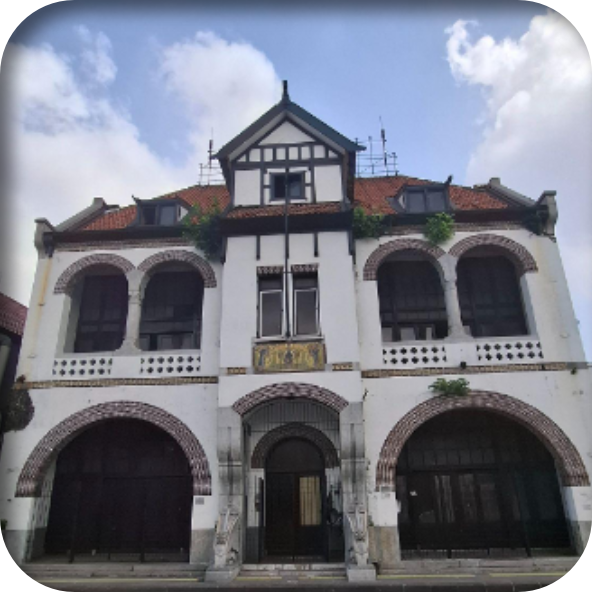
The Gedung Singa building in Surabaya is one of the most important monumental artifacts from the early 20th century colonial period. Designated as a category A Cultural Heritage Building, it embodies a complex symbolic narrative, particularly within the ornamentation of its façade. This study aims to examine the symbolic meanings embedded in the façade ornamentation of Gedung Singa through the perspective of archaeology and architecture. This study employs a symbolic archaeological approach, which views the façade as a medium of visual communication that conveys symbolic messages. The analysis was conducted through direct observation, complemented by an iconographic study to interpret the meanings of the ornamental symbols found on the façade. The results reveal that the façade ornaments of Gedung Singa actively communicate complex messages concerning corporate power, protection, and colonial narratives of cultural harmony between European and indigenous societies in the Dutch East Indies. Through symbolic interpretation, Gedung Siga is also an ideological artifact that represents how colonialism projected its relations of power through architecture and visual symbolism.
Article Details

This work is licensed under a Creative Commons Attribution-NonCommercial-ShareAlike 4.0 International License.
References
Abbas, N. (1997). Bangunan Kolonial: Beberapa Permasalahannya. Artefak Edisi Agustus No.18.
Agustianti, S. W., & Dharmatanna, S. W. (2025). Transportation Route Shifts Impacts on The Deterioration of Facades in Kalimas Timur. Journal of Artificial Intelligence in Architecture, 4(1), 35–47.
Agustimas, R. M. (2018). Simbol Singa Sebagai Lambang Negara Belanda 'Het Koninkrijk Der Nederlanden".
Akshar, Muh., & Solissa, F. (2025). Exploring the influence of cultural identity on contemporary architectural styles in Southeast Asia. The Journal of Academic Science, 2(5), 1301–1313.
Arbani, I. R. (2017). strategi Revitalitasi Kawasan Sungai Kalimas di Surabaya Utara. Institut Teknologi Sepuluh Nopember.
Arifin, M. H., & Savitri, M. (2024). Gagasan Pelestarian Gedung Singa di Kota Surabaya melalui Revitalisasi. PURBAWIDYA: Jurnal Penelitian dan Pengembangan Arkeologi, 13(1), 59–81. https://doi.org/10.55981/purbawidya.2024.1987
Bangsa, P., Suwasono, A., Jatmiko, E., & Laksana, D. (2021). Jan Toorop: Traces of Javanese Culture in Art Nouveau Graphic Design Style. . 2nd International Conference on Intermedia Arts and Creative Technology.
Damayanti, F., & Chandra, S. (2024). Identifikasi Fasad Bangunan Cagar Budaya Paseban Tri Panca Tunggal. Jurnal Arsitektur, 16(1), 10–14.
Ferguson, G. (1959). Signs and Symbolism in Christian Art. Oxford University Press.
Fox-Davies, A. C. (1909). A Complete Guide to Heraldy. . T.C & E.C. Jack.
Geus, A. de, & De Visser Smits, D. (1931). Beknopte geschiedenis der Vrijmetselarij in Nederlands Oost-Indie. Dalam D. de Visser Smits (red), Vrijmetselnrij. Geschiedenis, maatschappelijke beteekenis en doel.
Gomez-Moreno, C. (1968). The Mystery of the Eight Evangelists. . The Metropolitan Museum of Art Bulletin, 26(2), 263–268.
Hageman, J. Jc. (1866). Geschiedenis der vrijmetselarij in de oostelijke en zuidelijke deelen des nardbols (Eerste tijdvak, loopende tot 5799).
Hall, J. (1974). Dictionary of Subjects and Symbolism in Art. Harper & Row.
Hamill, J., & Gilbert, R. (1998). Freemasonry: A Celebration of the Craft (Greenwich Edition). Mackenzie Publishing Ltd.
Handinoto. (1996). Perkembangan Kota dan Arsitektur Kolonial Belanda di Surabaya 1870-1940. Penerbit ANDI.
Handinoto, & Irwan, S. (2013). Pemberian ciri lokal pada arsitektur kolonial lewat ornamen pada awal abad ke-20. Dimensi (Journal of Architecture and Built Enviconment), 39(1), 37–50.
Handinoto, & Santoso, I. (2012). Pemberian Ciri Lokal Pada Arsitektur Kolonial Lewat Ornamen Pada Awal Abad ke-20. Dimensi: Jurnal of Architecture and Built Environment, 39(1), 37–50.
Harland-Jacobs, J. (2007). Builders of Empire: Freemasonry and British Imperialism, 1717-1927. University of North Carolina Press.
Harris, C. (2006). Dictionary of Architecture and Construction (Fourth Edition). McGraw-Hill.
Hasan, L. O. A., & Ikaputra, I. (2025). Tinjauan Teoretis Makna Arsitektur melalui Perspektif Semiotika. Arsitektura, 23(1), 53. https://doi.org/10.20961/arst.v23i1.97622
Hodder, I. (1982). Symbols in Action: Ethnoarchaeological Studies of Material Culture. Cambridge University Press.
Hodder, I. (2009). Symbolism in Action: Ethnoarchaeological Studies of Material Culture. University of Cambridge.
Hodder, I., & Hutson, S. (2004). Rerading the past: Current approaches to interpretation in archaeology (Third edition). Cambridge University Press.
Jacob, M. (1991). Living the Enlightment: Freemansory and Politics in Eighteenth-Century Europe. Oxford University Press.
Kostof, S. (1995). A History of Architecture: Setting and Rituals. Oxford University Press.
Lahor, J. (2012). Art Nouveau. Parkstone Press.
Livingstone, A., & Livingstone, I. (1994). The Thames and Hudson Encyclopedia of Graphic Design and Designers. Thames and Hudson.
Meggs, P., & Purvis, A. (2012). Meggs’ History of Graphic Design. John Wiley and Sons.
Norbruis, O. (2018). Alweer een sieraad voor de stad Het werk van Ed. Cuypers en Hulswit-Fermont in Nederlands-Indie 1897-1927 (First Edition). LM Publisher.
Nurubiatmoko, A., Rukmini, W., & Sari, K. E. (2020). Pemilihan Objek Utama Citra Kawasan Cagar Budaya Jalan Rajawali Kota Surabaya. Planning for Urban Region and Environment Journal, 9(3), 203–214.
Ottevanger, A. (2018). Acquisitions: Twentieth-Century Drawings. . The Rijksmuseum Bulletin, 66(2), 170–183.
Panofsky, E. (1939). Studies in Iconology. Oxford University Press.
Puspita, C., & Dharmatanna, S. W. (2024a). Effect of Population Density and Urban Intensity on Building Typology in South Krembangan Area. Journal of Architectural Design and Urbanism, 6(1), 23–35.
Puspita, C., & Dharmatanna, S. W. (2024b). Identifikasi Urban Tissue Pada Kawasan Krembangan Selatan. Rustic: Jurnal Arsitektur, 4(1), 1–13.
Ramadhani, F. (2024). Menilik Sejarah Gedung Singa Surabaya yang Berusia 123 Tahun. https://www.detik.com/jatim/budaya/d-7592547/menilik-sejarah-gedung-singa-surabaya-yang-berusia-123-tahun.
Semarangsch handels-en advertentie-blad. (1882). De Locomotief .
Soegiarto, R., Dharmatanna, S. W., & Damayanti, R. (2025). Identifikasi Fasad Bangunan Cagar Budaya Gedung Cerutu di Kota Surabaya. Jurnal Arsitektur, 17(1), 38–43.
Soekiman, D. (1996). Seni Bangunan Gaya Indis: Penelitian, Pelestarian, dan Pemanfaatannya. Diskusi Ilmiah Arkeologi VIII.
Soekiman, D., & Purwanto, B. (2018). The Indis style: the transformation and hybridization of building culture in colonial Java Indonesia. Paramita: Historical Studies Journal, 28(2), 137–151.
Steenbrink, K. (1993). Dutch Colonialism and Indonesian Islam: Contacts and Conflicts 1596–1950 (J. Steenbrink & H. Jansen, Ed.). Rodopi.
Stevens, Th. (2000). Vrijmetselarij en samenleving in Nederlands-Indie en Indonesie, 1764-1962. Verloren.
Tamimi, N., Fatimah, I. S., & Hadi, A. A. (2020). TIPOLOGI ARSITEKTUR KOLONIAL DI INDONESIA. Vitruvian Jurnal Arsitektur Bangunan dan Lingkungan, 10(1), 45. https://doi.org/10.22441/vitruvian.2020.v10i1.006
Tilley, C. (1991). Material Culture and Text: The Art of Ambiguity. Routledge. (1 ed.). Routledge.
Trigger, B. (2006). A History of Archaeological Thought (Second Edition). University of Cambridge.
