Numerical Investigation of Propeller Vibration due to Propeller Performance and Blade Angle Effect
DOI:
https://doi.org/10.55981/ijoa.2026.15509Keywords:
propeller, modal approach, nonlinear harmonics, fluid structure interaction, vibrationAbstract
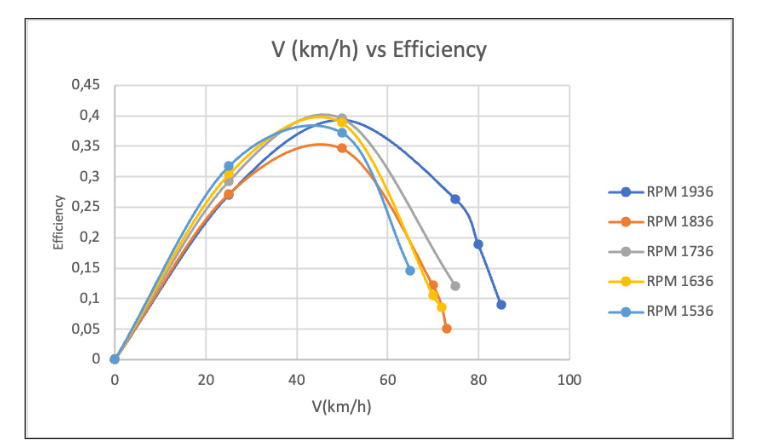
The propeller is an essential component of an aircraft that generates thrust. It must be capable of withstanding significant loads at its hub due to centrifugal, thrust, and tangential forces. Among these forces, centrifugal force can cause vibrations during high-frequency engine rotation. Excessive speeds at the propeller blade tips (resulting in shockwaves) can also lead to vibrations. Continuous vibrations as the propeller speed increases can cause fatigue in the propeller structure. Therefore, it is necessary to analyze the effect of propeller speed on vibrations. Numerical simulation methods are employed to determine the propeller speed at which vibrations occur. The numerical simulation performed involves Fluid-Structure Interaction (FSI) in unsteady conditions using modal approach and nonlinear harmonic method. From the numerical simulation results, performance curves for each propeller angle are obtained. The highest efficiency value at an angle of 18° is 0.39 at 1736 RPM. In contrast, angles of 20° and 22° have efficiency values of 0.59 and 0.68, respectively, at 1936 RPM. The vibration characteristics were then analyzed at those conditions when the efficiency is at the highest value. The maximum deformations observed for each angle are 0.183 mm, 0.185 mm, and 0.187 mm. with vibration velocity 8.17 x 10⁻⁶ mm/s. There is no rapid increase on deformation in short period of time, which means there are no indication of flutter. Also considering the vibration acceptable limit of 0.2 IPS (5.08 mm/s), the propeller operation can be considered safe.
References
Muetze, A., & Strangas, E. G. (2016). The Useful Life of inverter-based drive bearings: Methods and research directions from localized Maintenace to prognosis. IEEE Industry Applications Magazine, 22(4), 63–73. doi:10.1109/mias.2015.2459117
Maidi Saputra, & Hakim, I. (2018). Maintenance Propeller Hartzell Pada Pesawat Cessna 172. Jurnal Mekanova Mekanikal Inovasi Dan Teknologi, 2(1). https://doi.org/10.35308/jmkn.v2i1.848
Min, B.-Y., Wake, B. E., Bowles, P. O., C.G. Matalanis, & Moffitt, B. (2015). Propeller Analysis using a Hybrid Navier-Stokes/Free-Wake Method.
Czyż, Z., Karpiński, P., Skiba, K., & Wendeker, M. (2021). Wind Tunnel Performance Tests of the Propellers with Different Pitch for the Electric Propulsion System. Sensors, 22(1), 2. https://doi.org/10.3390/s22010002
Higgins, R. J., Jimenez-Garcia, A., Barakos, G. N., & Bown, N. (2019). High-Fidelity Computational Fluid Dynamics Methods for the Simulation of Propeller Stall Flutter. AIAA Journal/AIAA Journal on Disc, 57(12), 5281–5292. https://doi.org/10.2514/1.j058463
Higgins, R., Jimenez-Garcia, A., Barakos, G. N., & Bown, N. (2019). A Time-Marching Aeroelastic Method Applied to Propeller Flutter. AIAA SCITECH 2022 Forum. https://doi.org/10.2514/6.2019-1102
Zhu, W., & Gao, H. (2019). A Numerical Investigation of a Winglet-Propeller Using an LES Model. Journal of Marine Science and Engineering, 7(10), 333. https://doi.org/10.3390/jmse7100333
Prasad, A. S., Ramakrishna, S., & M. Madhavi. (2018). Experimental Investigations on Static and Dynamic Parameters of Steel and Composite Propeller Shafts with an Integrated Metallic Joints. 5(13), 26925–26933. https://doi.org/10.1016/j.matpr.2018.08.180
Prasad L, M., Manjunath, Sathish, & Kumar, S. (2018). Structural and Vibration Analysis of propeller blade in small aircraft. International Research Journal of Engineering and Technology (IRJET), 5(11), 595–600. https://www.irjet.net/archives/V5/i11/IRJET-V5I11117.pdf
Ghalamchi, B., Jia, Z., & Mueller, M. W. (2020). Real-Time Vibration-Based Propeller Fault Diagnosis for Multicopters. IEEE/ASME Transactions on Mechatronics, 25(1), 395–405. https://doi.org/10.1109/tmech.2019.2947250
Qu, Y., Su, J., Hua, H., & Meng, G. (2017). Structural vibration and acoustic radiation of coupled propeller-shafting and submarine hull system due to propeller forces. Journal of Sound and Vibration, 401, 76–93. https://doi.org/10.1016/j.jsv.2017.03.034
Ruseno, N. (2024). FEM Modal Analysis of Blades Number Effect in UAV Propellers. Indonesian Journal of Aerospace, 22(1), 1–12. https://doi.org/10.55981/ijoa.2024.39
Prabhu, J. J., Dash, A. K., Nagarajan, V., & Sunny, M. R. (2022). Vibration analysis of cycloidal propeller blade during ship maneuvering. Journal of Marine Science and Technology, 28(1), 44–71. https://doi.org/10.1007/s00773-022-00899-1
J. H. Mak and W. S.-I. W. Salim, Analysis of propeller blade through CFD modelling. Journal of Design for Sustainable and Environment. Vol. 4 No. 1 (2022) p. 25–31.
Ji, Z., Guo, T., Zhou, Di, Lu, Z., & Lyu, B. (2024). Time-Domain Analysis of Body Freedom Flutter Based on 6DOF Equation. Computer Modeling in Engineering & Sciences, 138(1), 489–508. https://doi.org/10.32604/cmes.2023.029088
Drachinsky, A., Avin, O., Raveh, D. E., Yaron Ben-Shmuel, & Tur, M. (2022). Flutter Tests of the Pazy Wing. AIAA Journal, 60(9), 5414–5421. https://doi.org/10.2514/1.j061717
Hartzell Propeller LLC. (2024). Propeller owner’s manual and logbook: Steel hub reciprocating propellers with aluminum blades (Manual No. 167, 61-00-67, Rev. 6). Piqua, OH: Author.
Downloads
Published
How to Cite
Issue
Section
License
Copyright (c) 2026 Vicky Wuwung, Zaim Sidqi Islami, Ismi Damaiyanti, Yohanes Sinung Nugroho, Teguh Wibowo, Radi Suradi Kartanagara

This work is licensed under a Creative Commons Attribution-ShareAlike 4.0 International License.