Characterization Bee Bread Associated Microbials from Tetragonula laeviceps and Identification of Bacillus subtilis as Antibacterial Agent

Authors

  • Antonia Caitlin Gondowardoyo School of Life Sciences, Indonesia International Institute for Life Sciences (I3L), Jakarta, Indonesia
  • Ema Damayanti Research Center for Food Technology and Processing, National Research and Innovation Agency
  • Mastari Ayu Anggraeni Study Program of Biotechnology, Faculty of Natural Sciences and Technology, Technology Sumbara University, West Nusa Tenggara, Indonesia
  • Tsania Taskia Nabila Doctoral Student of Pharmacy, Faculty of Pharmacy, Universitas Gadjah Mada, Yogyakarta, Indonesia
  • Noorendra Laksamana Putra Directorat of Laboratory Management, Research Facilities and Science and Technology Park, BRIN, Gunungkidul, Yogyakarta, Indonesia
  • Siti Muslimatun School of Life Sciences, Indonesia International Institute for Life Sciences (I3L), Jakarta, Indonesia
  • Riri Rimbun Anggih Chaidir Doctoral Student of Pharmacy, Faculty of Pharmacy, Universitas Gadjah Mada, Yogyakarta, Indonesia
  • Titiek Farianti Djaafar Research Center for Food Technology and Processing, National Research and Innovation Agency (BRIN), Gunungkidul, Indonesia

DOI:

https://doi.org/10.14203/ann.bogor.2022.v30.n1.1-10

Keywords:

Bee Bread, Pollen, Antibacterial Agent, Associated Microbials, Stingless Bee

Abstract

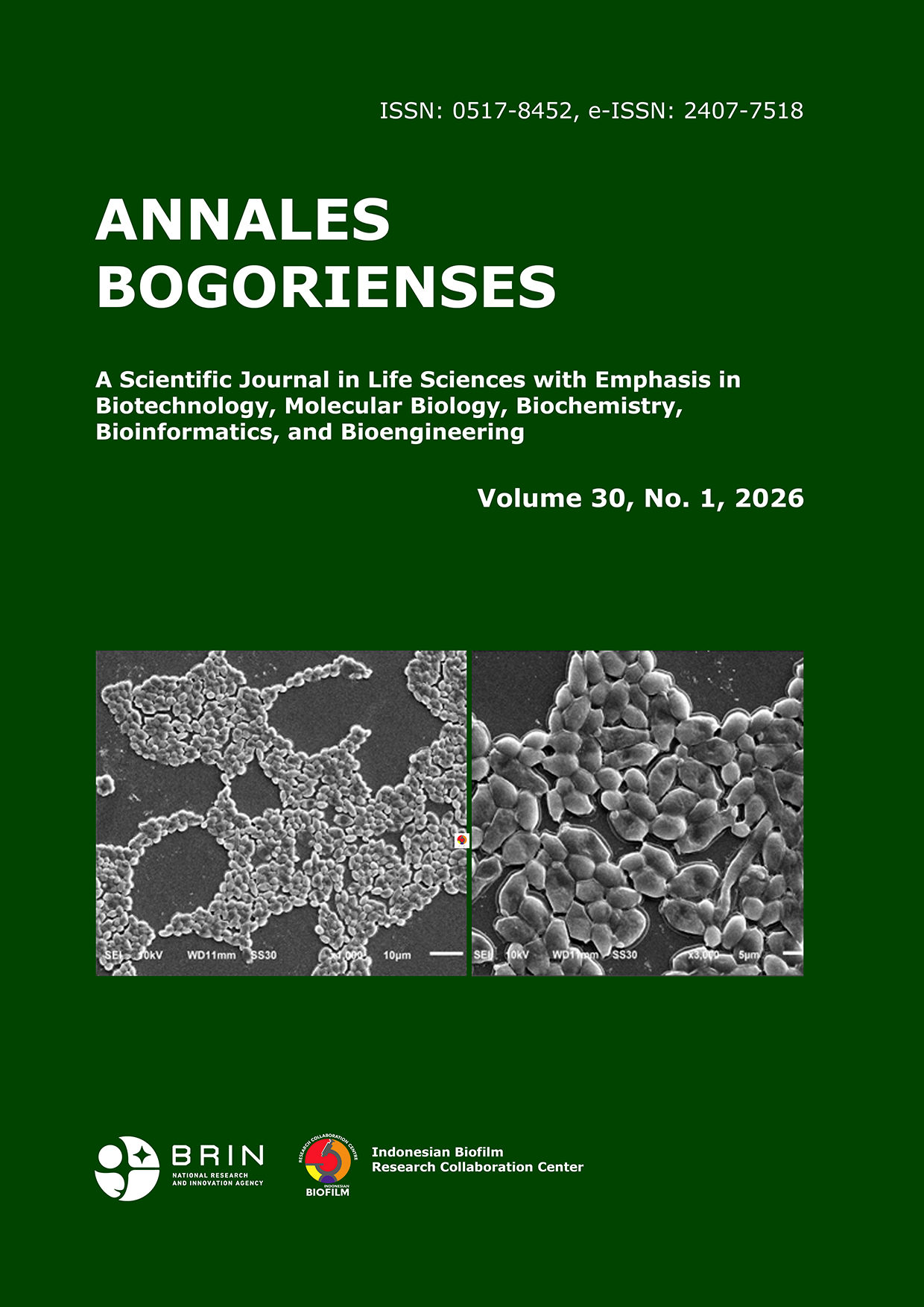
Bee bread is a fermented bee product originating from bee pollen carried by bees and stored in pots in the hive, specifically by stingless bees. Bee bread serves as a food reserve for bee colonies and is naturally preserved through a fermentation process involving numerous microorganisms. As a fermented product, bee bread contains beneficial microorganisms that can be used as an antibacterial agents against pathogenic bacteria. This study aimed to isolate anti-pathogenic bacterial microbials from bee bread Tetragonula laeviceps originating from Sumbawa, Indonesia. The isolation of bee bread microbes was performed using different Agar media, including  Chloramphenicol Yeast Glucose Agar (YGCA), Potato Dextrose Agar (PDA), Malt Extract Agar (MEA), and Sabouraud Dextrose Agar (SDA) by using the spread plate plate method. Isolated microbes identification was carried out using Gram staining and catalase activity assay, and antibacterial activity assay was carried out using the well diffusion method on Escherichia coli FNCC 0091, Staphylococcus aureus FNCC 0047, and Pseudomonas aeruginosa FNCC 0070. The isolate with the highest antibacterial activity was isolate 19. Further identification via 16S rRNA gene sequence analysis revealed that isolate 19 shares 94.91% similarity with Bacillus subtilis strain BCRC 10255, a finding also confirmed by morphological characteristics using scanning electron microscopy. This study highlights the potential of B. Subtilis 19, derived from T. laeviceps bee bread, as a promising antibacterial agent.
Author Biographies

Antonia Caitlin Gondowardoyo, School of Life Sciences, Indonesia International Institute for Life Sciences (I3L), Jakarta, Indonesia

School of Life Sciences, Indonesia International Institute for Life Sciences (I3L), Jakarta, Indonesia

Mastari Ayu Anggraeni, Study Program of Biotechnology, Faculty of Natural Sciences and Technology, Technology Sumbara University, West Nusa Tenggara, Indonesia

Study Program of Biotechnology, Faculty of Natural Sciences and Technology, Technology Sumbara University, West Nusa Tenggara, Indonesia

Tsania Taskia Nabila, Doctoral Student of Pharmacy, Faculty of Pharmacy, Universitas Gadjah Mada, Yogyakarta, Indonesia

Research Assistant, Research Center for Food Technology and Processing, BRIN, Gunungkidul, Indonesia

Noorendra Laksamana Putra, Directorat of Laboratory Management, Research Facilities and Science and Technology Park, BRIN, Gunungkidul, Yogyakarta, Indonesia

Directorat of Laboratory Management, Research Facilities and Science and Technology Park, BRIN, Gunungkidul, Yogyakarta, Indonesia

Siti Muslimatun, School of Life Sciences, Indonesia International Institute for Life Sciences (I3L), Jakarta, Indonesia

School of Life Sciences, Indonesia International Institute for Life Sciences (I3L), Jakarta, Indonesia

Titiek Farianti Djaafar, Research Center for Food Technology and Processing, National Research and Innovation Agency (BRIN), Gunungkidul, Indonesia

Research Center for Food Technology and Processing, National Research and Innovation Agency (BRIN), Gunungkidul, Indonesia

Downloads

Published

2026-09-30

How to Cite

Gondowardoyo, A. C., Damayanti, E., Anggraeni, M. A., Nabila, T. T., Putra, N. L., Muslimatun, S., … Djaafar, T. F. (2026). Characterization Bee Bread Associated Microbials from Tetragonula laeviceps and Identification of Bacillus subtilis as Antibacterial Agent. Annales Bogorienses, 30(1), 1–10. https://doi.org/10.14203/ann.bogor.2022.v30.n1.1-10

Similar Articles

<< < 1 2 3 > >> 

You may also start an advanced similarity search for this article.