
About the Journal
Annales Bogorienses (eISSN: 2407-7518 | pISSN: 0517-8452) is a biannual, peer-reviewed life sciences journal managed by the National Research and Innovation Agency of Indonesia (BRIN). The journal publishes high-impact research primarily in the areas of biofilm-associated infections, antimicrobial and antibiofilm drug discovery, microbial food safety, quantitative microbial risk assessment, and environmental biofilms.
Journal Metrics
Rate
Decision
Accreditation
| Journal Name | Annales Bogorienses |
| P-ISSN | 0517-8452 |
| E-ISSN | 2407-7518 |
| Country | Indonesia |
| Language | English and Indonesia |
| Frequency | 2 issues per year |
| Accreditation | SINTA 2 by Kemdiktisaintek valid through Volume 29 Number 1 (2025) |
| Publisher | BRIN Publishing |
| DOI | 10.55981/ann.bogor |
| Editor in Chief | Nodali Ndraha, Ph.D |
| Citation Analysis | Dimensions | Scopus |
| OAI | https://ejournal.brin.go.id/annales/oai |
Current Issue
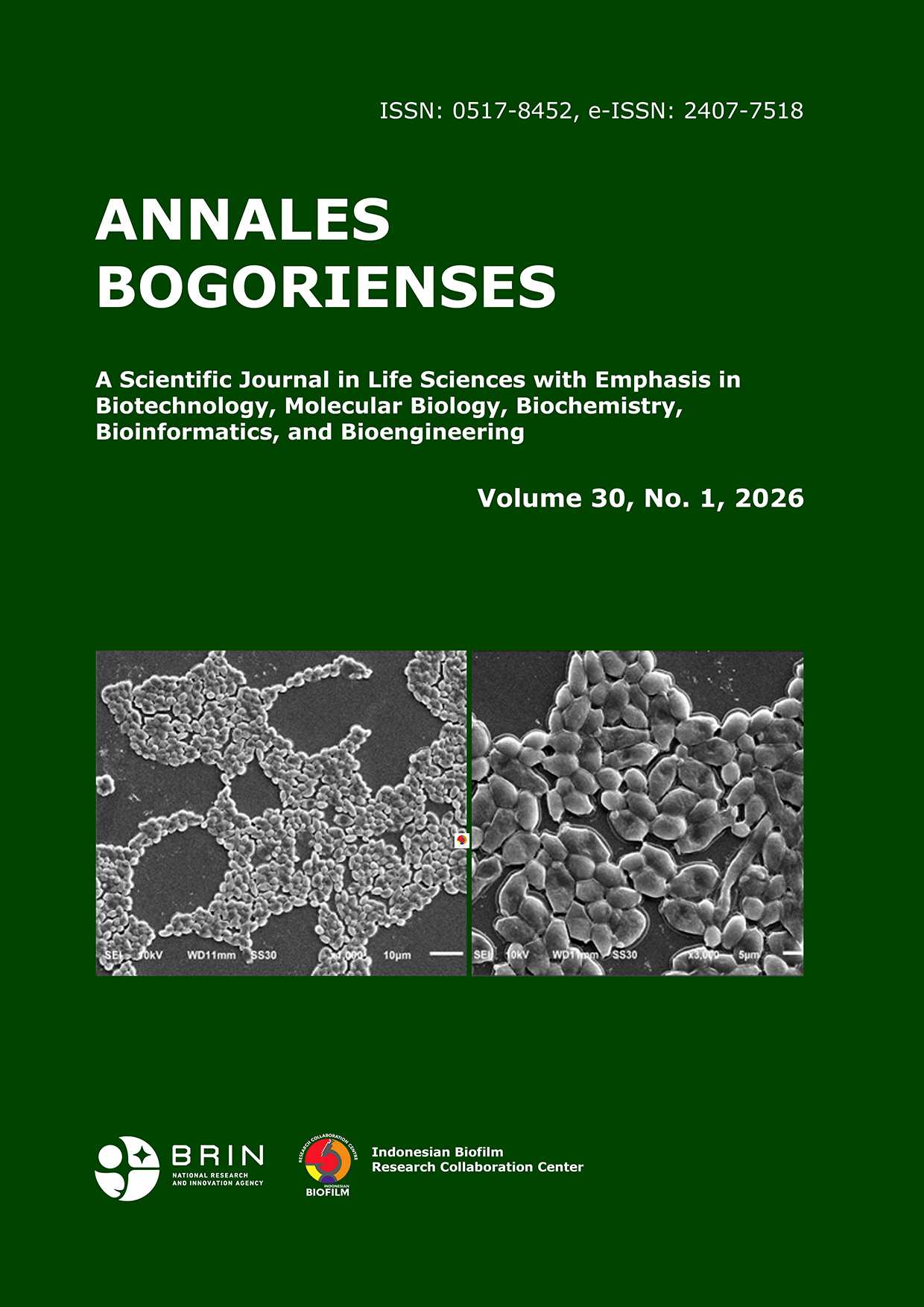
Volume 30, Number 1 (2022) of Annales Bogorienses presents a robust compilation of multidisciplinary investigations centered on the phytochemical elucidation, antimicrobial dynamics, and therapeutic paradigms of botanical products and indigenous fermented matrices. This issue significantly advances contemporary methodologies addressing antimicrobial resistance and microbial ecology through rigorous evaluations of the antibiofilm efficacy of Etlingera balikpapanensis rhizome extracts against methicillin-resistant Staphylococcus aureus (MRSA), the antibacterial and biofilm-inhibitory properties of Mitragyna speciosa (kratom) foliar extracts, and the isolation of bioactive Bacillus subtilis strains from Tetragonula laeviceps bee bread. Furthermore, the therapeutic utility of regional flora is substantiated via quantitative in vivo analyses of the analgesic responses elicited by Crescentia cujete L. (majapahit) stem bark, alongside comprehensive evaluations of enhanced antioxidant capacities and vitamin C retention in diverse herbal kombucha infusions. This collective scientific endeavor reflects a highly collaborative output exclusively driven by researchers across a wide network of Indonesian institutions—including the National Research and Innovation Agency (BRIN), Universitas Gadjah Mada, the Indonesia International Institute for Life Sciences (I3L), the Borneo Bioinfection Research Center, and various specialized regional universities (such as Universitas Muhammadiyah Kalimantan Timur, STIKes Karya Putra Bangsa, and Universitas Negeri Malang)—ultimately underscoring Indonesia's extensive domestic contributions to bioprospecting, ethnopharmacology, and biotechnological innovation.

